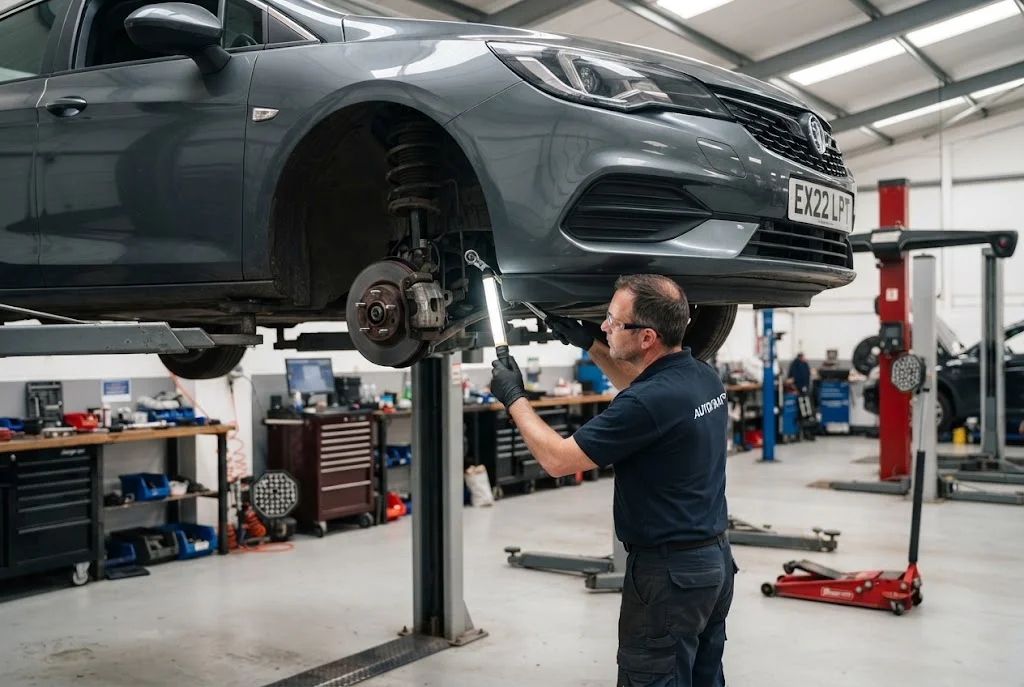
Wheel alignment is an important part of vehicle maintenance that can affect tyre wear, steering behaviour, driving stability and overall handling. When the wheels are not correctly aligned, a car may pull to one side, develop uneven tyre wear or feel less predictable on the road. Understanding wheel alignment can help UK drivers recognise warning signs and decide when professional inspection may be worthwhile.
Wheel alignment is sometimes described as wheel tracking or steering alignment, although these terms can refer to slightly different aspects of the same general area of vehicle geometry. The correct alignment settings depend on the vehicle, suspension design and manufacturer’s specifications. A professional workshop should therefore use the appropriate measurements rather than relying on a generic setting.
What Is Wheel Alignment?
Wheel alignment refers to the adjustment and measurement of the angles and positions of a vehicle’s wheels relative to one another and to the road. The aim is to ensure that the wheels point and operate within the manufacturer’s specified geometry.
Correct alignment can help the vehicle travel in a predictable direction while allowing the tyres to maintain appropriate contact with the road. When alignment is outside the recommended range, the effects can include uneven tyre wear, changes in steering behaviour and reduced driving comfort.
Alignment is not simply about making the steering wheel look straight. A technician needs to assess the relevant wheel and suspension geometry and determine whether the measurements fall within the vehicle manufacturer’s specifications.
Why Wheel Alignment Matters
Correct wheel alignment can contribute to stable handling and even tyre wear. When the geometry is incorrect, a tyre may not meet the road in the way intended by the vehicle manufacturer.
This can become noticeable through changes in steering response or tyre condition. A driver might notice that the car appears to drift towards one side, that the steering wheel does not sit centrally while travelling straight or that one part of a tyre is wearing faster than another.
Alignment is particularly worth considering after events that may affect suspension or steering geometry. Hitting a significant pothole or kerb, for example, can potentially damage or move components and may justify an inspection if new handling or tyre-wear symptoms appear.
Wheel Alignment and Wheel Tracking: Are They the Same?
The terms wheel alignment and wheel tracking are often used interchangeably in everyday automotive conversations. However, “tracking” is commonly used when referring particularly to the adjustment of the front wheels, especially their toe angle.
Wheel alignment can be a broader process involving multiple geometry measurements, depending on the vehicle. These can include toe, camber and caster, although not every angle is adjustable on every vehicle.
For this reason, drivers should ask the workshop what measurements it has checked and what adjustment is actually required rather than relying on the service name alone.
Understanding Wheel Alignment Terminology
Alignment terminology can sound technical, but understanding the basic concepts makes it easier to discuss vehicle handling with a garage.
Toe
Toe describes the direction the wheels point when viewed from above. If the fronts of the wheels are closer together than the rears, the wheels have toe-in. If the fronts are farther apart, they have toe-out.
Incorrect toe settings can contribute to tyre wear and changes in steering behaviour. The appropriate setting varies by vehicle.
Camber
Camber describes the inward or outward tilt of a wheel when viewed from the front or rear of the vehicle.
Too much positive or negative camber can affect the way the tyre contacts the road and may contribute to uneven wear. Whether a camber value is acceptable depends on the manufacturer’s specifications and the vehicle’s suspension design.
Caster
Caster is an angle associated with the steering axis when viewed from the side of the vehicle. It contributes to steering behaviour, stability and the way the steering returns towards centre after a turn.
Not every vehicle provides adjustment for caster, so a measurement outside specification may require further investigation rather than a simple alignment adjustment.
Thrust Angle
Thrust angle describes the direction in which the rear wheels effectively push the vehicle relative to its centreline. If the rear geometry is not correctly aligned, it can influence how the vehicle tracks along the road.
This is one reason a proper alignment assessment should not automatically focus only on the front wheels.
Signs Your Car May Need Wheel Alignment
There is no single symptom that proves an alignment problem exists. However, several signs can justify having the vehicle inspected.
The Vehicle Pulls to One Side
If the car consistently moves towards the left or right on a reasonably level road when the driver is not steering in that direction, alignment may be one possible cause.
However, road camber, tyre pressures, tyre condition and worn suspension or steering components can also affect the vehicle’s direction. A professional inspection is therefore needed to identify the actual cause.
The Steering Wheel Is Off-Centre
A steering wheel that sits noticeably off-centre while the vehicle is travelling straight can indicate an issue with wheel alignment or steering geometry.
It can also occur after suspension or steering work if components have not been correctly adjusted. The appropriate response is to have the vehicle checked rather than simply repositioning the steering wheel.
Uneven Tyre Wear
Uneven tyre wear is one of the most useful clues that something may be wrong with wheel geometry. One edge of a tyre may wear faster than the other, or the tread may show irregular patterns.
However, alignment is not the only possible cause. Incorrect tyre pressure, worn suspension components, wheel imbalance or other mechanical problems can also influence tyre wear.
Unusual Handling
A vehicle that feels less stable, wanders more than expected or behaves differently during cornering may need further inspection.
Handling symptoms should not automatically be attributed to alignment. Steering, suspension, tyres and wheel components all work together, so a technician should assess the complete system.
What Causes Alignment Problems?
Vehicle alignment can change for several reasons. Normal use, impacts and component wear can all affect suspension and steering geometry.
Potholes and kerbs are common concerns because a significant impact can affect wheels, tyres, steering components or suspension parts. Even when there is no obvious visible damage, a change in handling or tyre wear may justify an inspection.
Suspension wear can also influence alignment. If a ball joint, track rod component, bush or other part has excessive movement, simply adjusting the alignment may not solve the underlying problem.
This is why a professional workshop should check the condition of relevant components before completing an alignment adjustment.
Wheel Alignment After Tyre or Suspension Work
Wheel alignment can be relevant after certain suspension or steering repairs. If components that influence wheel geometry have been replaced or adjusted, checking the alignment can help confirm that the vehicle is operating within the appropriate specifications.
However, not every tyre replacement automatically requires a full alignment. A tyre change and an alignment are separate services, although tyre condition can reveal symptoms that make an alignment inspection sensible.
Likewise, if a suspension component has been replaced, the correct procedure depends on the vehicle and the component involved. Drivers should ask the workshop whether an alignment check is recommended as part of the repair.
Wheel Balancing vs Wheel Alignment
Wheel balancing and wheel alignment are different services, although both can affect driving quality.
The Wheel balancing deals primarily with the distribution of weight around the wheel and tyre assembly. An imbalance can contribute to vibration, particularly at certain speeds.
Wheel alignment, by contrast, concerns the geometric relationship between the wheels, steering and suspension.
This distinction is important because a vibration does not automatically mean the vehicle needs an alignment, just as uneven tyre wear does not automatically mean a wheel needs balancing. The symptoms should be investigated properly.
How Wheel Alignment Affects Tyre Wear
Tyres are designed to operate across a particular contact area with the road. When wheel geometry is incorrect, the tyre can experience abnormal loading or contact patterns.
For example, excessive toe or an unsuitable camber angle can contribute to wear on particular parts of the tread. The exact pattern depends on the vehicle and the nature of the geometry problem.
Regularly checking tyres can therefore provide useful information about vehicle condition. Drivers should look for changes in tread depth across the tyre and unusual wear patterns rather than waiting until the tyre becomes obviously damaged.
The UK’s official MOT inspection manual includes tyre condition, tread depth, pressure and other tyre-related requirements as part of vehicle testing. :contentReference[oaicite:0]{index=0}
Wheel Alignment and Vehicle Handling
Alignment geometry influences how a vehicle responds to steering inputs. When the settings are within the manufacturer’s intended range, the vehicle should behave predictably under normal driving conditions.
Incorrect geometry can change steering response, straight-line behaviour and tyre contact with the road. However, handling problems can also arise from worn components, incorrect tyre pressures or tyre defects.
The UK’s MOT inspection guidance separately assesses steering components and identifies defects involving excessive movement, misalignment and other conditions that can affect steering. :contentReference[oaicite:1]{index=1}
This highlights an important maintenance principle: wheel alignment should be considered alongside the overall condition of the steering, suspension, wheels and tyres.
How a Professional Alignment Check Works
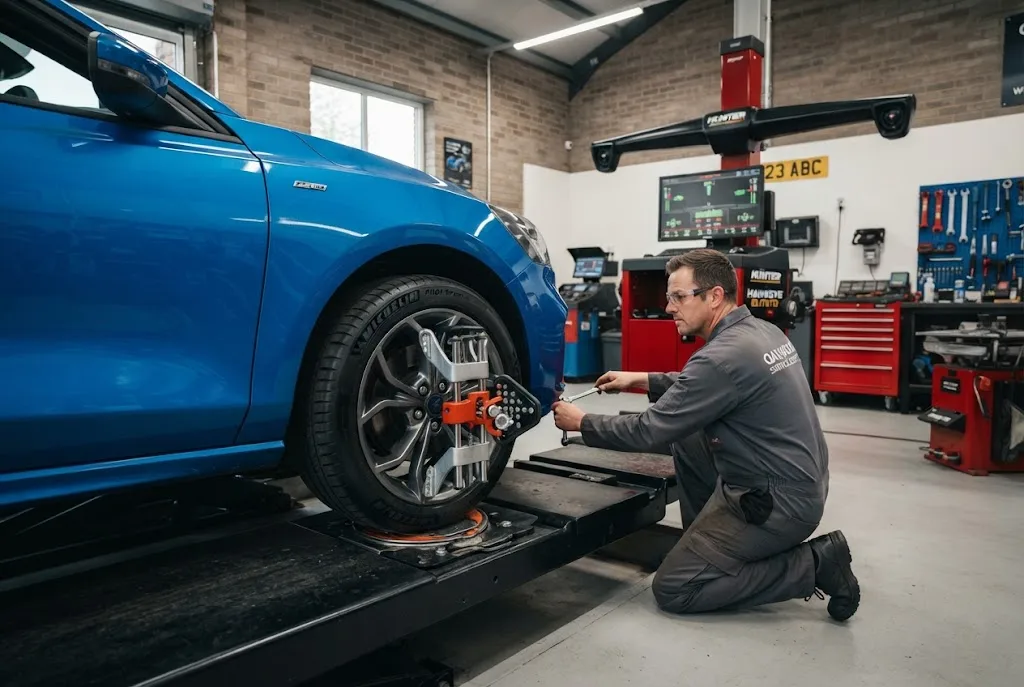
A professional workshop normally uses alignment equipment to measure the vehicle’s wheel geometry. The vehicle is positioned correctly, sensors or measurement equipment are attached according to the system being used, and the readings are compared with the relevant specifications.
If measurements are outside the permitted or recommended range and the vehicle allows adjustment, the technician can make the appropriate changes.
However, an alignment machine cannot repair a worn or damaged suspension component. If the readings cannot be corrected or the vehicle has excessive movement, the underlying mechanical issue may need to be addressed first.
Should Every Car Have Wheel Alignment Checked?
There is no universal rule requiring every car to receive a wheel alignment at a fixed interval. The appropriate approach depends on the vehicle manufacturer’s recommendations, driving conditions and symptoms.
Drivers should consider an inspection if they notice persistent pulling, an off-centre steering wheel, unexplained uneven tyre wear or handling changes. It can also be sensible to ask about alignment after a significant pothole or kerb impact or after relevant steering and suspension repairs.
Routine tyre inspections can help identify developing problems early. If the tread is wearing unevenly, addressing the cause may prevent further premature tyre wear.
How to Choose a Wheel Alignment Service
When selecting a garage, drivers should consider more than the advertised price of an alignment service.
Ask What Is Being Measured
A reputable workshop should be able to explain which alignment angles it is checking and which adjustments are available for the vehicle.
Check Whether the Vehicle Has Mechanical Issues
If steering or suspension components are worn, alignment adjustment alone may not resolve the problem. Ask whether the workshop has inspected the relevant components.
Request Before-and-After Measurements
Where the equipment provides measurement reports, these can help show which readings were outside specification and what changed after adjustment.
Consider the Vehicle Manufacturer’s Specifications
Alignment settings are vehicle-specific. The correct values should be based on appropriate specifications rather than a universal target.
Wheel Alignment on Modern and Electric Vehicles
Wheel alignment remains relevant regardless of whether a vehicle uses petrol, diesel, hybrid or electric propulsion. The steering and suspension geometry still affects tyre contact and handling.
Electric vehicles can also have substantial battery-related weight and strong instant torque, making appropriate tyre and chassis maintenance important. EV owners can learn more about the wider maintenance requirements in our guide to EV servicing.
Hybrid owners should likewise consider alignment as part of the wider maintenance picture. Our guide to hybrid servicing explains how hybrid maintenance combines conventional vehicle checks with additional electrified-system requirements.
Wheel Alignment and MOT Testing
Wheel alignment should not be confused with the MOT test itself. An MOT assesses specific aspects of a vehicle against defined testing requirements, while a commercial wheel alignment service is intended to measure and, where possible, adjust vehicle geometry.
The current GOV.UK MOT manual for cars and passenger vehicles covers steering, axles, wheels, tyres and suspension as separate areas of inspection. :contentReference[oaicite:2]{index=2}
Therefore, passing an MOT does not necessarily mean a vehicle has perfect alignment settings. If a driver notices pulling, uneven tyre wear or other handling changes after an MOT, an alignment or wider steering and suspension inspection may still be appropriate.
Final Takeaway
Wheel alignment is an important part of vehicle geometry that can influence tyre wear, steering behaviour and handling. Understanding terms such as toe, camber, caster and tracking can help drivers communicate more effectively with a garage and recognise why an alignment check may be recommended.
Drivers should not assume that every handling problem is caused by alignment. Tyres, wheel balancing, suspension components, steering parts and tyre pressures can all produce similar symptoms. A proper inspection is therefore more useful than replacing parts or requesting an alignment without investigating the cause.
For UK motorists, regular tyre checks and attention to changes in steering or handling are practical ways to identify potential problems early. If the vehicle has suffered a significant impact or develops persistent uneven tyre wear, pulling or steering changes, professional assessment can help determine whether alignment adjustment or another repair is required.
For official information about vehicle steering, wheels, tyres and suspension requirements, drivers can consult the GOV.UK MOT inspection guidance.