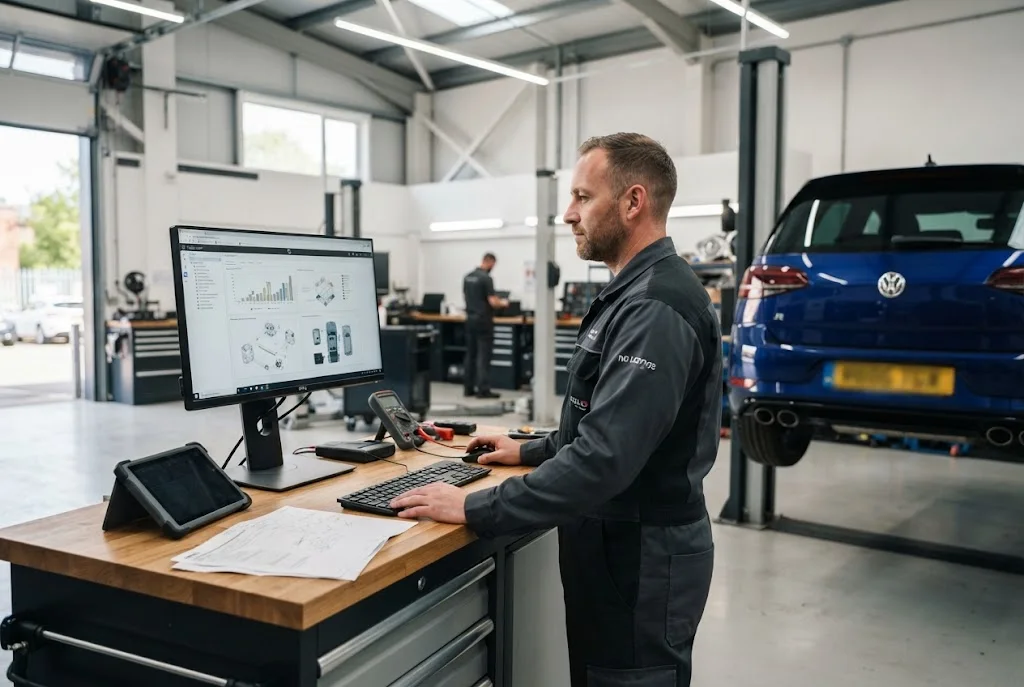
A complete service history gives vehicle owners a clearer record of how a car has been maintained, inspected and repaired over time. Instead of relying on memory or scattered paperwork, organised records can show when important work was completed, what was replaced and which issues have previously been identified.
Good vehicle documentation is useful throughout ownership. It can help with future maintenance, make conversations with a garage easier and provide valuable information when a vehicle is eventually sold. While MOT records provide an important source of information in the UK, they should not be confused with a complete servicing and repair history.
What Is a Service History?
A service history is a record of maintenance and repair work carried out on a vehicle. Depending on the vehicle and how it has been maintained, the record may contain service invoices, inspection reports, repair receipts, maintenance schedules, parts information and other documentation.
The amount of information available can vary significantly between vehicles. Some owners keep detailed records for every visit, while others may only have a service book or a small collection of invoices.
A strong record should make it reasonably easy to establish what work has been performed and when. It should also help distinguish routine maintenance from unexpected repairs or diagnostic investigations.
Why Vehicle Documentation Matters
Vehicle documentation provides a reference point for future decisions. When a car develops a problem, previous repair information may help a technician understand what has already been investigated or replaced.
Documentation can also help owners avoid unnecessary repetition. If a component was recently replaced, the relevant invoice or service record may confirm the date and work performed.
For vehicles that are being sold, organised records can also help demonstrate the maintenance history available to a prospective buyer. However, documentation should always be accurate. Records should never be altered to make a vehicle appear better maintained than it actually was.
What Should a Service Record Include?
A useful service record should contain enough information to identify the vehicle and understand the work that took place. Depending on the type of service or repair, this can include:
- Vehicle registration number
- Make and model
- Date of the service or repair
- Mileage at the time of work
- Type of service performed
- Parts or components replaced
- Diagnostic work carried out
- Inspection findings
- Recommended follow-up work
- Workshop or technician details
- Invoice or job reference where available
Not every record will contain every item. The important principle is consistency. Recording key information at each visit makes the overall maintenance history more useful.
Digital Service Records Are Easier to Organise
Digital service records can make vehicle documentation easier to store and retrieve. Instead of keeping paper invoices in several locations, owners can maintain digital copies in an organised folder or suitable record-keeping system.
Digital records can include scanned invoices, photographs of relevant documents, inspection reports and electronic receipts. File names should be descriptive enough to identify the vehicle and date without opening every document.
For example, a consistent naming system can separate routine servicing from repairs and inspections. This makes it easier to find information when booking future work or checking what has already been completed.
How to Maintain a Useful Maintenance Log
A maintenance log should be updated whenever significant work is carried out. It does not need to be complicated. A simple chronological record can provide a useful overview of the vehicle’s maintenance.
For each entry, record the date, mileage, work performed and any important recommendations. If an invoice or inspection report exists, keep it with the corresponding entry.
It can also be useful to record upcoming maintenance requirements. For example, if a technician recommends monitoring a component or returning for a particular maintenance task, noting the recommendation can prevent it from being forgotten.
Keeping a Repair History Separate From Routine Servicing
A vehicle’s repair history is an important part of its wider service record. Repairs are different from routine maintenance because they usually address a fault, failure or specific problem.
Recording repairs separately can make recurring issues easier to identify. If the same warning light, component or symptom appears again, previous repair information may provide useful context for the technician.
Repair records should ideally include what problem was reported, what diagnosis was performed, what repair was completed and which parts were involved where that information is available.
This can be especially helpful when different workshops work on the same vehicle over its lifetime.
MOT History Is Not the Same as Service History
UK drivers should understand the difference between an MOT record and a complete maintenance history. The official GOV.UK service allows motorists to check past MOT results, including pass or fail outcomes and mileage recorded at tests. For applicable vehicles in Great Britain, historical MOT results are available through the government service. [Check the MOT history of a vehicle](https://www.gov.uk/check-mot-history?utm_source=chatgpt.com)
An MOT history can therefore provide useful evidence about testing and recorded mileage, but it does not replace workshop invoices, servicing records or repair documentation.
For example, a vehicle can have a record of passing its MOT tests while having additional maintenance performed between those tests. Those servicing and repair activities need to be documented separately if an owner wants a fuller picture of the vehicle’s history.
Maintenance Tracking Helps Prevent Missed Work
Maintenance tracking can help owners stay organised when several maintenance tasks are involved. Instead of remembering everything mentally, drivers can record completed work and note tasks that may be due later.
Useful information to track can include routine servicing, tyre replacement, brake work, battery replacement, fluid maintenance and other manufacturer-recommended tasks.
The exact maintenance schedule depends on the vehicle. Owners should use the manufacturer’s guidance and information provided by their servicing professional rather than relying on a generic schedule for every car.
Keeping an accurate record also makes future discussions with a garage more productive because the technician can see what has already been completed.
Service Documentation Helps Workshops Too
Service documentation is not only useful to vehicle owners. Workshops can also benefit from accurate records when a returning customer brings the vehicle back for further work.
Previous inspection findings, repair details and service information can help technicians understand the vehicle’s background. This can be particularly useful when diagnosing recurring faults or determining whether a component has previously been replaced.
Clear documentation also supports better communication between workshop staff and customers. A technician can refer to recorded information instead of relying on incomplete recollections.
How Inspection Reports Fit Into Vehicle Records
Inspection reports can add another layer of useful information to a vehicle’s records. As explained in our guide to auto inspection services, a good inspection report should document what was checked, what was found and what action may be required.
Keeping these reports alongside service invoices creates a stronger record of the vehicle’s condition over time. It can also show how a recommendation developed into completed maintenance or repair work.
For example, an inspection may identify a component that needs monitoring. A later invoice can then document its replacement. Together, the documents provide a clearer timeline than either record would provide on its own.
Mobile Service Records Should Also Be Kept
Vehicle owners who use a mobile auto service should apply the same record-keeping principles. A mobile mechanic may provide digital reports, invoices, photographs or other documentation after completing work at the customer’s location.
These documents should be stored with the rest of the vehicle’s maintenance information. Keeping records from mobile and traditional workshops together creates a more complete picture of the vehicle’s maintenance history.
If a mobile technician identifies additional work that requires a workshop, the relevant report or recommendation should also be retained. This can help connect the initial mobile assessment with the eventual repair.
Organising Records for Future Ownership
Good record keeping becomes particularly valuable when a vehicle is sold. A new owner may want to understand how the vehicle has been maintained and what work has recently been completed.
Owners should organise records chronologically and remove duplicate or irrelevant files. Important invoices, service records, inspection reports and repair documents should be easy to identify.
It is also sensible to keep personal or payment information secure when sharing documents with another person. Only information relevant to the vehicle’s maintenance should normally be provided to a prospective buyer.
What to Do If the Service History Is Incomplete
Not every vehicle has a perfect service record. Missing documentation does not automatically mean that a vehicle has been poorly maintained, but it does mean that some maintenance claims may be difficult to verify.
If records are incomplete, start by gathering everything that is available. This might include old invoices, service book entries, MOT information and documentation from previous workshops.
From that point, create a new record and maintain it consistently. A missing historical period cannot always be reconstructed, so it is better to label uncertain information accurately rather than make assumptions about work that may or may not have occurred.
Better Records Lead to Better Maintenance Decisions
A well-maintained service history turns scattered automotive paperwork into a useful timeline. It can show what has been serviced, which repairs have been completed and what recommendations remain outstanding.
It also connects naturally with vehicle maintenance costs. Keeping invoices and repair records makes it easier to understand where money has been spent and identify recurring maintenance requirements. For more information, see our guide to car service cost.
Good communication is equally important. When customers can provide accurate records, workshops have more context when explaining maintenance recommendations. This supports the clearer customer communication discussed in our guide to auto care services.
How to Build a Better Service History
Creating a useful vehicle record does not require complicated software. The most important step is to record information consistently whenever the vehicle receives servicing, inspection, diagnosis or repair work.
Keep invoices and reports together, record mileage and dates, distinguish routine maintenance from repairs and store important documents in a format that can be retrieved easily. Where possible, retain both digital and original records appropriately.
A complete record will not prevent mechanical problems, but it can make vehicle maintenance easier to manage. It gives owners and technicians a shared reference point and provides a clearer understanding of what has happened throughout the vehicle’s life.
Ultimately, a reliable service history is more than a collection of receipts. It is a practical record of vehicle care that supports better maintenance tracking, clearer workshop communication and more informed ownership decisions.