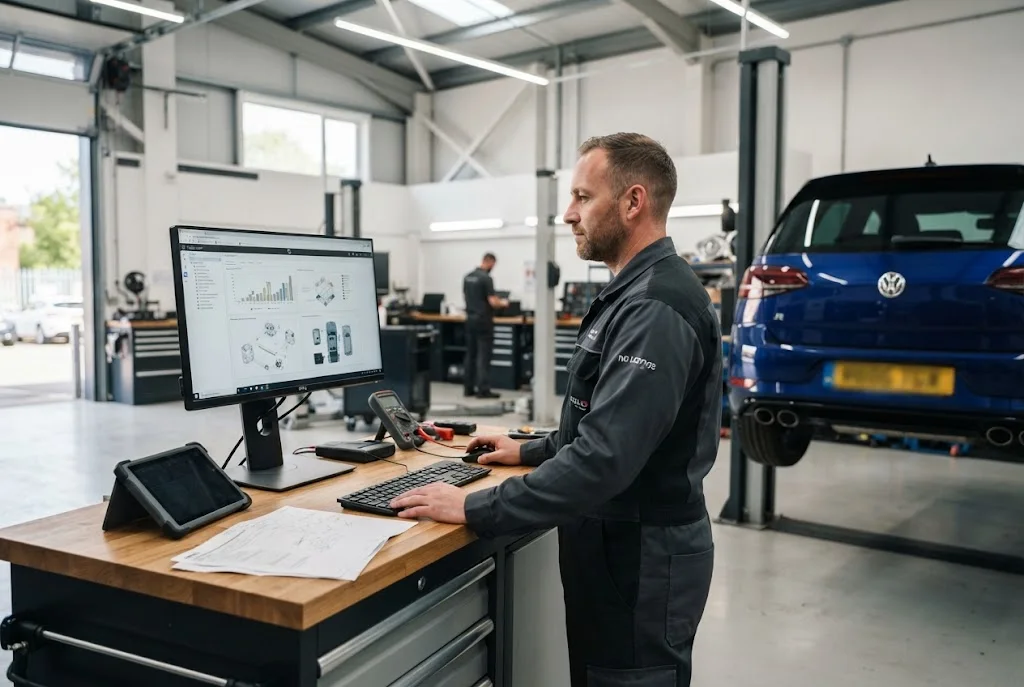
Professional auto care services involve more than maintaining and repairing vehicles. The way a workshop communicates with customers can have just as much influence on the overall service experience. Clear explanations, realistic expectations and useful maintenance advice help vehicle owners understand what their cars need and why particular work may be recommended.
Automotive problems can be difficult for customers to understand because many involve technical terminology and components that are not immediately visible. Good customer communication bridges that gap. Instead of simply presenting a list of faults or repairs, a professional automotive business should explain the issue in language the customer can follow and provide enough information to make an informed decision.
What Are Auto Care Services?
Auto care services cover a broad range of activities intended to maintain, inspect, diagnose, repair or otherwise support a vehicle. Depending on the business, this may include routine servicing, diagnostics, inspections, repairs, maintenance advice and other automotive assistance.
The customer experience can vary considerably depending on how these services are delivered. A technically competent repair can still leave a customer dissatisfied if the work was poorly explained or expectations were unclear from the beginning.
For that reason, communication should be treated as part of the service rather than an afterthought. Customers should know what has been requested, what has been discovered and what action is being recommended.
Why Customer Service Matters in Automotive Businesses
Customer service is particularly important in automotive businesses because customers often seek assistance when something is wrong with a vehicle. A warning light, unusual noise or unexpected repair can create uncertainty, especially when the owner does not have technical knowledge.
A calm and structured communication process can make the situation easier to manage. The business should acknowledge the customer’s concern, gather relevant information and explain the next step without unnecessarily complicating the conversation.
This does not mean avoiding technical information. Instead, technical information should be translated into language that makes its practical significance clear.
Clear Service Explanations Build Trust
Good service explanations answer three basic questions: what has been found, why it matters and what can be done about it.
For example, telling a customer that a component has “excessive wear” may not be enough. The explanation can be more useful when it describes the affected component, explains the observed condition and states whether the issue requires immediate attention, further testing or routine replacement.
The same principle applies to diagnostic work. A diagnostic result is not always the same thing as a confirmed repair requirement. Customers should understand whether a test has identified a definite fault, highlighted a possible cause or indicated that further investigation is necessary.
Workshop Communication Should Be Consistent
Workshop communication works best when information is recorded and communicated consistently throughout the customer journey. The information given during booking should connect with the inspection, diagnosis, repair and final handover.
For example, if a customer reports an intermittent engine warning, that symptom should be included in the job information. When the vehicle is assessed, the technician’s findings can then be linked to the original complaint.
This approach reduces the risk of important information being lost between reception staff, technicians and customers. It also creates a clearer record for future visits.
Where mobile servicing is involved, the same principle applies to information gathered before and during a visit. A well-organised mobile auto service can use clear booking information and service updates to keep customers informed when work is carried out away from a traditional workshop.
Customer Education Is Part of Good Auto Care
Customer education does not mean turning every service appointment into a technical lesson. It means giving customers enough useful information to understand their vehicle and make sensible maintenance decisions.
A technician might explain why a particular maintenance task is recommended, what symptoms could indicate a developing problem or why a component needs to be monitored. Simple explanations can help customers recognise potential issues earlier.
Education can also reduce unnecessary misunderstandings. When customers understand the difference between routine maintenance, a diagnostic investigation and an urgent repair, they can make better decisions about what work to authorise.
Managing Service Expectations
Clear service expectations should be established before work begins. Customers should understand what has been booked, what the service includes and whether additional problems may require separate approval.
This is particularly important when the final scope of work cannot be known until an inspection or diagnostic assessment has been completed.
For example, a customer may book an inspection because of a braking noise. The initial assessment may identify a component that requires replacement, but the technician may also discover another issue that was not visible from the original symptoms. Explaining the difference between the booked inspection and additional recommended work helps prevent surprises.
Technical Communication Should Stay Understandable
Technical communication is necessary in automotive work, but technical language should not become a barrier between the workshop and customer.
Terms such as diagnostics, fault codes, suspension components or brake wear can be appropriate when they accurately describe the issue. However, they should be accompanied by a practical explanation when the customer may not know what they mean.
A useful explanation connects the technical finding to its real-world consequence. Instead of simply stating that a particular component is defective, the technician can explain how the problem affects vehicle operation and what action is recommended.
Maintenance Advice Should Be Practical
Good maintenance advice should help customers understand what needs attention now and what can be planned for later. Not every recommendation has the same level of urgency.
A workshop can make advice more useful by separating immediate concerns from routine maintenance and longer-term recommendations. This gives the customer a clearer basis for prioritising expenditure.
Maintenance advice should also take the vehicle’s circumstances into account. Driving patterns, mileage, vehicle age and previous repair history can all influence what should be considered during routine servicing.
Keeping these recommendations alongside documented repairs contributes to a useful service history. Over time, a well-maintained record can show what work has been performed and what maintenance may be due next.
Using Inspection Findings in Customer Conversations
Inspection findings provide an opportunity to make automotive communication more evidence-based. Rather than making broad statements about a vehicle, technicians can explain specific observations from the inspection.
This is particularly valuable when several issues are found at once. A clear inspection report can distinguish between safety-related concerns, wear that should be monitored and maintenance that can be scheduled.
Customers who receive understandable documentation can also refer back to the findings later. This supports continuity when another technician or workshop becomes involved in future work.
Explaining Costs Before Additional Work
Communication becomes especially important when an inspection leads to additional repairs. Customers should understand what work is being proposed and, where possible, what the expected cost will be before authorising it.
Where a precise price cannot be established until further diagnosis, the business can explain why. A transparent process is generally easier for customers to understand than presenting unexpected work without context.
Clear explanations around estimates, quotations and invoices also connect with the wider topic of car service cost. Customers benefit when pricing information is explained alongside the technical reason for the recommended work.
Digital Communication Can Improve the Service Experience
Modern workshops can use digital communication to keep customers informed throughout a job. Booking confirmations, inspection findings, service updates and completed-work documentation can all be shared electronically where appropriate.
Digital communication should still be clear and purposeful. Sending technical information without explanation does not necessarily improve customer understanding. The goal should be to provide the right information at the right stage of the service.
Digital records can also make future conversations easier because previous information can be retrieved rather than recreated from memory.
How Better Communication Benefits Workshops
Clear communication benefits the business as well as the customer. When the scope of work and recommendations are properly documented, staff have a clearer reference for what was discussed and authorised.
Consistent communication can also reduce avoidable misunderstandings between customers and technicians. When customers understand why a repair is recommended, they are better positioned to make a decision about the work.
Over time, professional communication can become an important part of a workshop’s reputation. Customers are more likely to value a business when technical information is delivered honestly, clearly and respectfully.
Building a Better Customer Experience
The strongest auto care services combine technical automotive work with effective customer communication. From the first booking to the final handover, customers should receive information that is accurate, understandable and relevant to their vehicle.
Good communication means explaining service findings, setting realistic expectations, providing useful maintenance advice and documenting important information. It also means recognising that customers have different levels of automotive knowledge and adapting explanations accordingly.
When workshops make communication part of their service process, technical work becomes easier for customers to understand. Clear documentation, practical advice and consistent updates can also support the vehicle’s longer-term maintenance records.
Ultimately, professional automotive care is not only about fixing or maintaining a vehicle. It is also about helping the owner understand what has been done, why it matters and what should happen next.