Reliable brakes are essential to safe driving, yet brake problems can develop gradually and may not always be obvious at first. Professional brake services can help identify worn components, investigate braking symptoms and maintain the systems responsible for bringing your vehicle to a controlled stop. Understanding brake repair, inspections, fluid maintenance and common braking terminology can help UK drivers recognise when their vehicle may need attention.
Brake systems contain several components that work together. Depending on the vehicle, these can include brake pads, discs, calipers, hydraulic components, brake fluid and electronic systems such as ABS. Because problems can affect stopping performance, unusual brake behaviour should not be ignored.
What Are Brake Services?
Brake services cover the inspection, maintenance, diagnosis and repair of a vehicle’s braking system. The exact work depends on the vehicle, its braking design, mileage, driving conditions and symptoms.
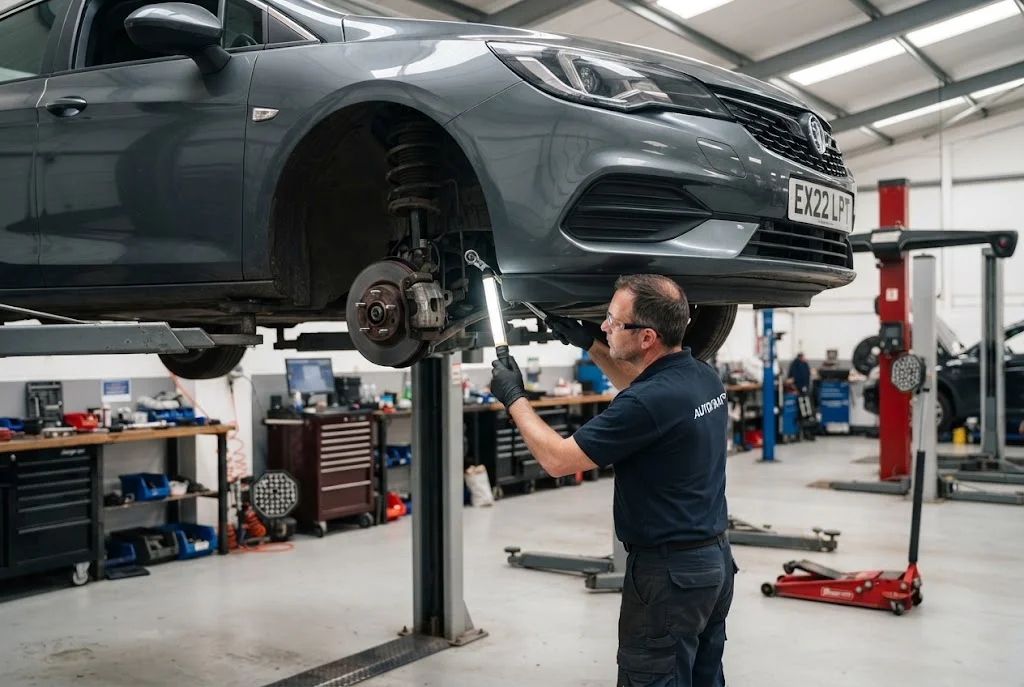
A routine brake inspection may involve checking the condition of brake pads and discs, looking for signs of damage or uneven wear, checking fluid levels and assessing other visible components. A repair appointment may instead focus on a specific symptom, such as grinding noises, vibration, pulling to one side or a brake warning light.
Brake servicing should not be confused with an MOT. An MOT checks specified requirements at the time of testing, while additional brake maintenance or repair may be needed to keep a vehicle in good working condition between tests.
How Vehicle Braking Systems Work
When a driver presses the brake pedal, force is transferred through the vehicle’s braking system to create friction or, in some vehicles, controlled regenerative braking. In a conventional disc-brake system, hydraulic pressure causes the caliper to press brake pads against a rotating disc.
The friction created between the pads and disc slows the wheel. Heat is produced during this process, which is why brake components need to be designed to withstand repeated changes in temperature.
Modern vehicles may also incorporate anti-lock braking systems and electronic controls. These systems can help manage wheel behaviour during braking, but they do not eliminate the need for properly maintained mechanical and hydraulic components.
Brake Inspection: What Gets Checked?
A professional brake inspection can assess the condition of components and identify signs that maintenance or repair may be required. The precise inspection depends on the vehicle and the type of service being carried out.
Technicians may examine brake pad thickness, disc condition, visible leaks, brake lines, calipers and other components. They can also consider the driver’s reported symptoms and assess whether braking performance is consistent.
Visible wear is only one consideration. A component can have adequate remaining material while another part of the braking system is experiencing a problem. This is why a broader assessment is useful when symptoms appear.
The UK government’s MOT inspection guidance includes specific checks relating to brakes, including condition, operation and performance. The inspection manual can be consulted through the official MOT brake system guidance.
Brake Pad Replacement
Brake pad replacement is one of the most common forms of brake maintenance on vehicles equipped with disc brakes. The Brake pads gradually wear as they generate friction against the discs.
The rate of wear can vary according to driving style, vehicle weight, traffic conditions, terrain and the type of brake components fitted. Frequent stop-start driving, for example, can place different demands on brakes than longer journeys on open roads.
Brake pads should be assessed as part of the wider braking system rather than judged by mileage alone. If pads are significantly worn, damaged or otherwise unsuitable for continued use, replacement may be necessary.
Drivers should also pay attention to changes in braking behaviour. A grinding sound, unusual noise or change in pedal feel warrants investigation rather than waiting for routine servicing.
Brake Disc Replacement and Disc Condition
Brake disc replacement may be required when discs have reached a condition or specification where continued use is no longer appropriate. Discs can experience wear and heat-related changes over time.
Visible scoring, corrosion, uneven wear or other abnormalities may warrant closer examination. However, the appearance of a disc alone does not always provide enough information to determine whether replacement is required.
Brake pads and discs work together, so technicians generally consider the condition of both components when assessing a braking problem. Replacing one component without addressing a related issue may fail to resolve the underlying symptom.
Brake Repair: Common Problems to Watch For
Brake repair can involve a wide range of faults. Some common warning signs include:
- Grinding, squealing or unusual braking noises.
- Vibration or juddering when braking.
- The vehicle pulling to one side during braking.
- A brake pedal that feels unusually soft or spongy.
- A brake pedal that feels different from normal.
- Longer stopping distances or reduced braking response.
- A brake or ABS warning light appearing on the dashboard.
- Visible brake fluid leakage.
These symptoms can have different causes. For example, vibration may relate to braking components or other vehicle systems, while a soft pedal can indicate a hydraulic or related issue. Professional diagnosis is therefore preferable to assuming that one particular component is responsible.
Brake Fluid Service
Brake fluid service is another important part of brake maintenance. Hydraulic braking systems depend on brake fluid to transfer pressure from the pedal to the braking components.
Brake fluid is designed to operate under demanding conditions, but it does not remain in exactly the same condition indefinitely. Manufacturers specify maintenance procedures and intervals for different vehicles, so drivers should consult the vehicle handbook or an appropriately qualified technician.
Brake fluid should also be checked if there are concerns about the hydraulic system. A low fluid level can indicate a leak or other issue and should not simply be treated as a reason to top up the reservoir without investigating the cause.
Understanding Common Braking Terminology
Learning basic braking terminology can make discussions with a garage easier.
Brake pads are friction components that press against a brake disc in a conventional disc-brake system. The brake disc, also called a rotor in some contexts, rotates with the wheel and provides the surface against which the pads create friction.
A caliper houses and operates the brake pads in many disc-brake systems. Brake fluid transfers hydraulic pressure through the braking system. ABS, or anti-lock braking system, is designed to help prevent wheels from locking under certain braking conditions.
Understanding these terms does not replace professional diagnosis, but it can help drivers understand what a technician is explaining and why a particular repair has been recommended.
Brake Maintenance and Everyday Driving
Regular brake maintenance can help identify developing problems before they become more serious. Maintenance should follow the vehicle manufacturer’s recommendations and take account of the vehicle’s actual use.
Drivers can also pay attention to changes in brake behaviour between professional inspections. A new noise, altered pedal feel, warning light or noticeable change in braking performance should be investigated promptly.
Tyres are also closely connected with overall braking performance because they provide the contact between the vehicle and road. This means that brake maintenance should be considered as part of broader vehicle safety rather than as an isolated mechanical task.
Brake Warning Lights and Electronic Systems
Modern vehicles can use electronic monitoring systems to alert drivers to braking-related problems. Depending on the vehicle, dashboard warnings may relate to the braking system, ABS, electronic parking brake or other functions.
A warning light should be interpreted according to the vehicle manufacturer’s instructions. Some warnings may indicate a condition that requires immediate attention, while others may require a diagnostic assessment.
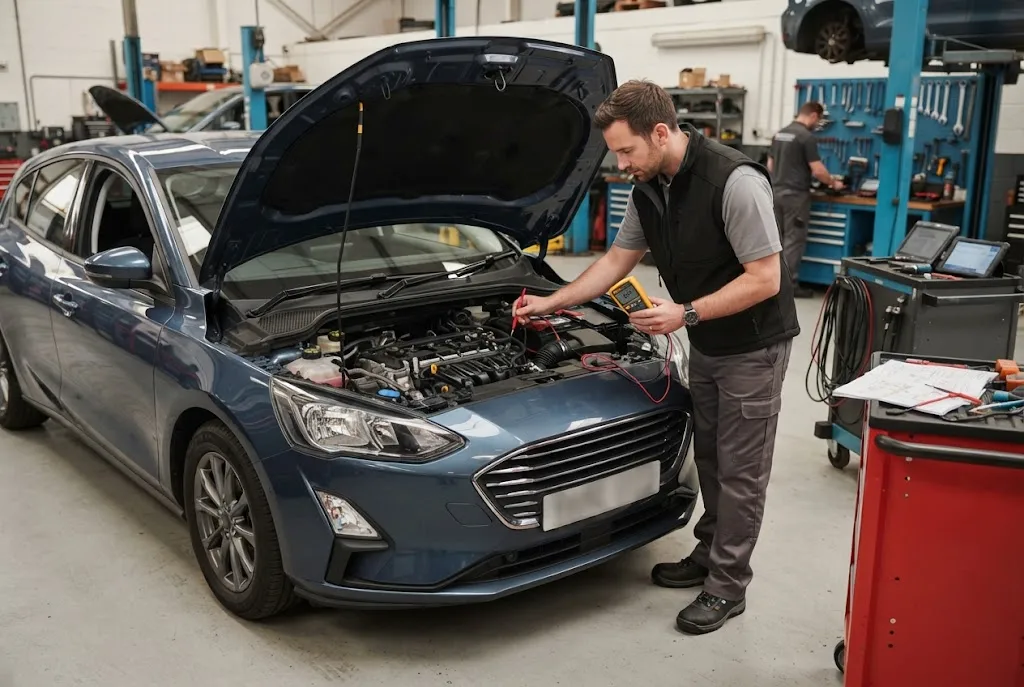
This is one area where auto inspection services and auto electrical services can overlap with brake diagnosis. Electronic faults and mechanical brake problems require different forms of testing, so the correct diagnostic approach matters.
Brake Services and Vehicle Diagnostics
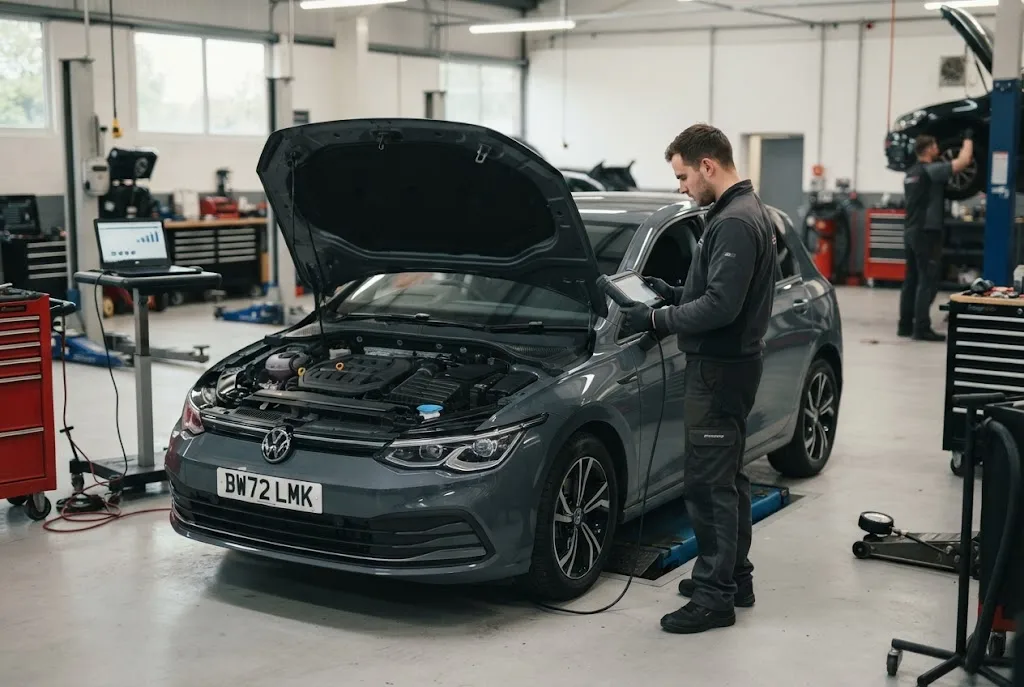
Some braking problems are mechanical, while others may involve electronic systems. A vehicle with an ABS warning light, for example, may require diagnostic testing in addition to a physical brake inspection.
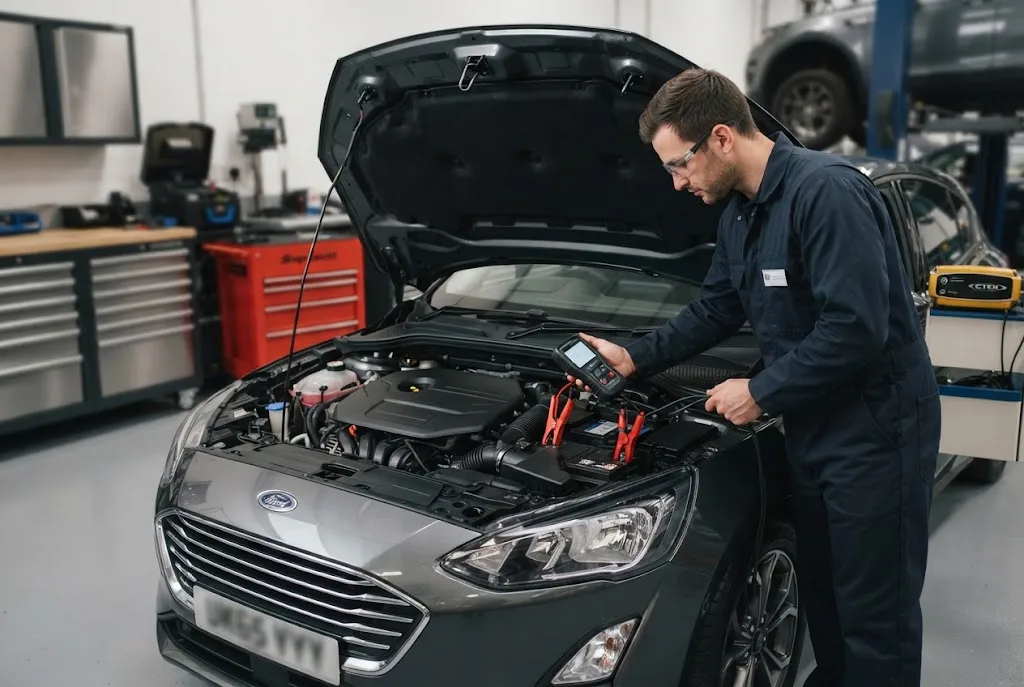
Understanding vehicle diagnostics can help explain why a technician may connect diagnostic equipment to a vehicle while also inspecting physical components.
Diagnostic information can provide clues, but it should be interpreted alongside physical inspection and the vehicle’s symptoms. A stored fault code does not necessarily mean that the corresponding component should automatically be replaced.
When Should You Book Brake Services?
Drivers should arrange an inspection if braking performance changes noticeably or if warning signs develop. Problems such as grinding noises, unusual vibration, a soft pedal or visible fluid leakage should not be ignored.
An inspection can also be appropriate when brake components are due for scheduled maintenance or when a vehicle is being prepared for a long journey. If you have recently purchased a used vehicle and have limited information about its maintenance history, a broader vehicle inspection can also provide useful information about its condition.
Any concern about reduced braking performance deserves particular attention because brakes are a critical safety system. If a vehicle does not appear to be braking normally, avoid continuing to drive it unnecessarily and seek appropriate professional advice.
Why Professional Brake Repair Matters
Brake systems combine components that must operate correctly and consistently. Replacing a worn pad or disc is only part of proper brake maintenance if another underlying problem is present.
Professional brake repair allows the technician to assess the relevant components, identify the likely cause of the problem and carry out work according to the vehicle’s requirements. This is especially important where hydraulic components, electronic braking systems or other safety-related parts are involved.
Using the correct components and following appropriate installation procedures also matters. Brake work is not an area where improvised repairs or unverified modifications are appropriate.
Final Thoughts on Brake Services
Brake services cover much more than replacing worn pads. Professional brake inspections can identify problems with pads, discs, calipers, fluid, hydraulic components and electronic systems, while regular maintenance can help keep the braking system operating as intended.
For UK drivers, paying attention to changes in braking performance is an important part of vehicle safety. Unusual noises, vibration, warning lights, fluid leaks or changes in pedal feel should be investigated rather than ignored.
Understanding basic braking terminology also makes it easier to communicate with technicians and understand recommended repairs. When a problem is suspected, a proper inspection provides a more reliable basis for deciding what work the vehicle actually needs.
Good brake maintenance ultimately comes down to recognising changes early, following manufacturer recommendations and obtaining professional assistance when a braking problem develops.