Modern cars rely on far more than mechanical components. From starting the engine and charging the battery to operating lights, sensors, safety systems and electronic controls, electrical systems are central to everyday driving. Understanding auto electrical services can help UK motorists recognise common electrical problems, understand what an auto electrician does and know when professional vehicle electrical repair may be necessary.
Electrical faults can sometimes appear as simple problems, such as a flat battery or failed bulb. However, the underlying cause can also involve wiring, charging systems, control modules, switches, sensors or other automotive electronics. Learning the basics makes it easier to describe symptoms accurately and understand the diagnostic process.
What Are Auto Electrical Services?
Auto electrical services cover the inspection, testing, diagnosis, repair and maintenance of a vehicle’s electrical and electronic systems. The work can range from straightforward battery and lighting checks to more complex electrical troubleshooting.
Depending on the vehicle and the fault, an auto electrician may work on batteries, alternators, starter circuits, lighting, wiring systems, electrical accessories, charging circuits, sensors and electronic control systems. Modern vehicles can contain multiple interconnected control modules, meaning that diagnosing a fault may require specialist equipment as well as traditional electrical testing.
The exact service required depends on the symptoms. A vehicle that will not start, for example, may have a weak battery, a charging problem, a starter circuit fault or another underlying issue. Testing is therefore important before replacing components unnecessarily.
What Does an Auto Electrician Do?
An auto electrician specialises in diagnosing and repairing vehicle electrical and electronic systems. Their work can involve testing circuits, checking electrical connections, examining wiring and using diagnostic equipment to identify faults.
Some electrical problems are relatively easy to identify. A damaged bulb, loose connection or visibly deteriorated cable may provide an obvious explanation. Other faults can be intermittent, meaning the problem appears and disappears depending on temperature, vibration, moisture or vehicle operating conditions.
Professional electrical troubleshooting can help narrow down these possibilities. Rather than assuming the first failed component is the cause, a technician can test the relevant circuit and compare the results with the vehicle’s expected operating values.
Understanding Automotive Electronics
Automotive electronics have become increasingly important as vehicles have gained more electronic features. Engine management, anti-lock braking systems, airbags, parking assistance, infotainment, climate control and driver-assistance features can all depend on electronic components and communication between control systems.
This means that a modern vehicle is effectively a network of electrical and electronic systems. A fault in one area can sometimes create symptoms elsewhere, which is why professional diagnosis can be more complicated than simply checking whether a fuse has blown.
Electronic systems also communicate information through sensors and control modules. When a sensor detects a condition outside the expected range, the vehicle may record information that can later be investigated using diagnostic equipment.
Common Electrical Components
Several components play particularly important roles in a conventional vehicle’s electrical system:
- Battery: Provides electrical energy for starting and supports electrical systems when required.
- Alternator: Generates electrical power while the engine is running and helps maintain the battery’s charge.
- Starter motor: Uses electrical energy to turn the engine during starting.
- Fuses: Help protect electrical circuits from excessive current.
- Wiring: Provides the electrical pathways connecting components and systems.
- Sensors: Measure operating conditions and provide information to vehicle control systems.
- Control modules: Manage specific electronic functions and communicate with other vehicle systems.
Battery Diagnostics and Charging Problems
Battery-related problems are among the electrical issues motorists are likely to encounter. A vehicle may struggle to start, produce a clicking sound, show electrical warnings or lose electrical functions when the battery is weak.
However, a battery that repeatedly becomes discharged may not necessarily be the only problem. The charging system, electrical connections or an unwanted electrical drain could also require investigation.
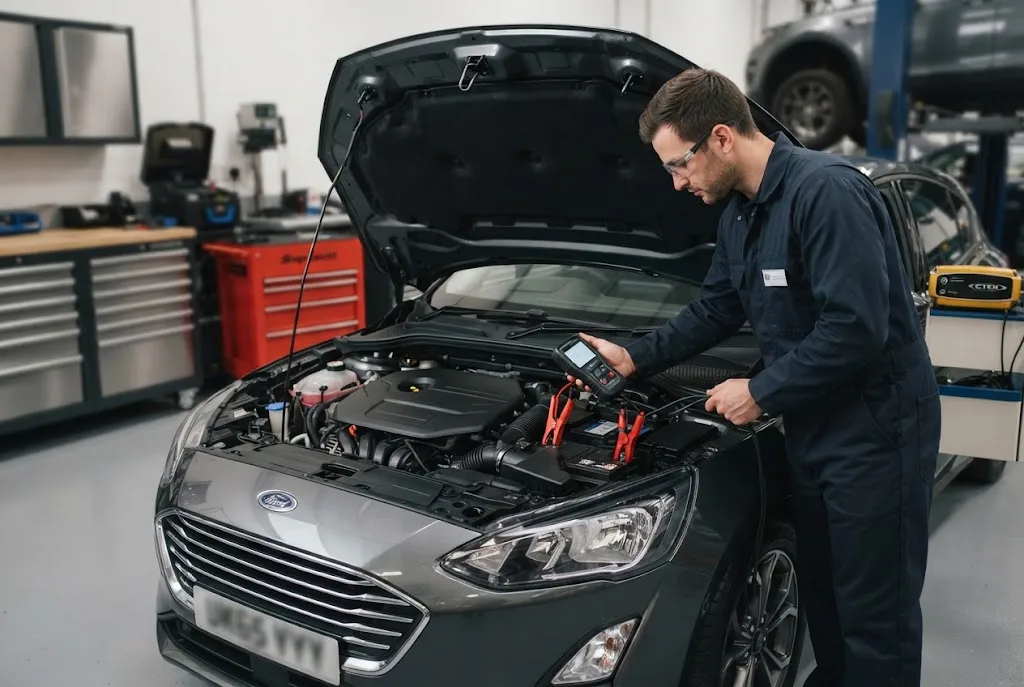
Battery diagnostics can involve checking the battery’s condition and assessing whether the charging system is functioning correctly. Drivers who want to understand the wider maintenance requirements can also explore auto battery service, including battery testing, charging, replacement and maintenance.
The UK Highway Code advises motorists to pay attention to their vehicle’s warning displays. It specifically notes that a charge warning light appearing while driving may indicate that the battery is not charging and should be checked promptly. Official Highway Code maintenance guidance provides further information on vehicle warning displays and electrical safety.
Alternator Repairs and Charging Systems
The alternator is an important part of the charging system in many conventional petrol and diesel vehicles. While the engine is running, it produces electrical power that supports vehicle systems and helps recharge the battery.
A charging-system problem can produce symptoms such as a battery or charging warning light, dimming lights, starting difficulties or repeated battery discharge. However, these symptoms do not automatically prove that the alternator itself has failed.
Electrical connections, belts, wiring and other charging-system components may also need to be checked. This is why alternator repairs should normally follow appropriate testing rather than being based solely on the appearance of a dashboard warning.
Vehicle Electrical Repair and Wiring Systems
Wiring systems provide the connections through which electrical power and signals travel around a vehicle. Damage to wiring can result from age, vibration, heat, moisture, corrosion, previous repairs or physical contact with other components.
Electrical faults caused by wiring can be particularly difficult to diagnose when the problem is intermittent. A circuit may work normally during one inspection and fail later when the vehicle moves, warms up or encounters moisture.
A professional vehicle electrical repair may therefore involve tracing a circuit, checking connectors, testing continuity or voltage and inspecting wiring for damage. Simply replacing a component without identifying the electrical cause may not resolve the underlying problem.
UK MOT inspection requirements also include visual checks of visible electrical wiring on applicable vehicles. The DVSA inspection manual identifies problems such as insecure wiring, damaged insulation and wiring that could create risks through contact with hot or rotating components.
Common Signs You May Need Auto Electrical Services
Electrical problems can present themselves in several ways. Recognising the symptoms can help you explain the problem to a technician.
- The engine is difficult to start or will not start.
- Interior or exterior lights appear unusually dim or fail intermittently.
- A battery or charging warning light appears.
- Electrical accessories stop working correctly.
- Fuses repeatedly blow.
- The battery repeatedly becomes discharged.
- Electrical functions work intermittently.
- Unusual electrical smells or signs of overheating appear.
- Several electronic warning messages appear unexpectedly.
- The vehicle develops unexplained electrical behaviour after previous repairs.
Not every symptom indicates the same fault. For example, dim headlights could potentially relate to bulbs, wiring, connections, battery condition or charging performance. A proper inspection helps establish the actual cause.
Electrical Troubleshooting: Why Diagnosis Matters
Electrical troubleshooting is the process of systematically identifying where an electrical problem originates. Instead of replacing parts based on assumptions, a technician works through the relevant circuit and tests possible causes.
The process may begin with the driver’s description of the symptoms. The technician may then inspect the vehicle, check fuses and connections, test battery and charging performance, examine wiring and use diagnostic equipment where appropriate.
This systematic approach is particularly useful for intermittent problems. Keeping notes about when a fault occurs can help. For example, tell the technician whether the problem happens only when the engine is cold, after rain, during long journeys or when several electrical systems are operating simultaneously.
Understanding Basic Electrical Terminology
Learning a few pieces of electrical terminology can make vehicle repairs easier to understand.
Voltage describes electrical potential difference, while current describes the flow of electrical charge. Resistance describes opposition to current flow. A circuit provides the complete electrical path needed for current to flow, while a short circuit occurs when current takes an unintended path.
A ground or earth connection provides the return path in a vehicle’s electrical system. A fuse protects a circuit by opening the circuit when excessive current flows. A relay is an electrically operated switch that allows a relatively small control circuit to operate another circuit.
Drivers do not need to become electrical engineers to understand these terms. Knowing the basics can simply make discussions about vehicle electrical repair clearer.
Electrical Systems in Electric and Hybrid Vehicles
Electric and hybrid vehicles introduce additional electrical considerations. Their propulsion systems can contain high-voltage components and cabling that require appropriate training, equipment and safety procedures.
The DVSA’s current MOT inspection guidance warns testers to be mindful of high-voltage components and cabling on electric and hybrid vehicles. It also states that propulsion batteries require additional care during inspection.
This is an important distinction for motorists. A conventional 12-volt electrical problem should not be treated as equivalent to a fault involving a vehicle’s high-voltage propulsion system. High-voltage work should be handled by appropriately competent professionals following manufacturer and safety procedures.
Electrical Safety Should Come First
Electrical faults should not be ignored, particularly when there are signs of overheating, burning smells, damaged wiring, sparks or other unusual behaviour. The Highway Code advises motorists to investigate unusual smells such as an electrical fault because of the potential fire risk.
The Health and Safety Executive also highlights electrical hazards associated with motor vehicles, including risks of electric shock, burns and fire. Its guidance states that people undertaking electrical work must be competent to do so and that manufacturer guidance should be followed.
Electric and hybrid vehicles require particular caution because high-voltage systems can present serious electrical hazards. If there is visible damage to high-voltage components or cabling, avoid attempting an improvised repair.
How Electrical Problems Connect With Vehicle Diagnostics
Electrical systems and vehicle diagnostics increasingly overlap. A fault affecting a sensor, control module, wiring circuit or power supply may cause an electronic warning or diagnostic trouble code.
This is why electrical diagnosis can complement broader auto inspection services. An inspection can establish the vehicle’s wider condition, while electrical testing can focus on suspected power, wiring or electronic faults.
Similarly, electrical symptoms can sometimes accompany engine-related problems. Understanding vehicle diagnostics can help motorists understand how technicians use diagnostic information alongside physical testing rather than treating a single fault code as a complete diagnosis.
Electrical faults can also affect starting and charging, making battery condition an important part of the investigation. In more complex cases, a technician may need to assess the battery, alternator, wiring and electronic control systems together.
How to Prepare for an Auto Electrical Appointment
Before visiting an auto electrician, make a note of exactly what happened. Record warning lights, unusual sounds, starting problems and any electrical functions that stopped working.
It is also useful to note when the fault occurs. Does it happen every time, only occasionally, after the vehicle has been parked overnight or when the weather is wet? These details can help narrow down an intermittent electrical fault.
If another garage has already carried out diagnostic testing, take the relevant report with you. Previous test results and repair history can provide useful context and prevent the same checks from being unnecessarily repeated.
Final Thoughts on Auto Electrical Services
Auto electrical services cover a broad range of work, from battery and alternator checks to complex wiring and electronic fault diagnosis. As modern vehicles depend increasingly on automotive electronics, understanding basic electrical systems has become useful for almost every driver.
The most important principle is to diagnose rather than guess. A flat battery, warning light or failed electrical component can have several possible causes. Professional testing can help identify the underlying fault and determine whether the required solution involves a battery, alternator, wiring, connection, sensor or another component.
For UK motorists, paying attention to electrical warning signs is also part of responsible vehicle maintenance. Regular checks, timely diagnosis and appropriate repairs can help keep essential systems operating correctly and support overall vehicle safety.
When an electrical fault is complex, intermittent or associated with damaged wiring or high-voltage systems, professional assistance is particularly important. Understanding the terminology and symptoms gives drivers a useful foundation, while qualified technicians can carry out the detailed testing and repair work required.